
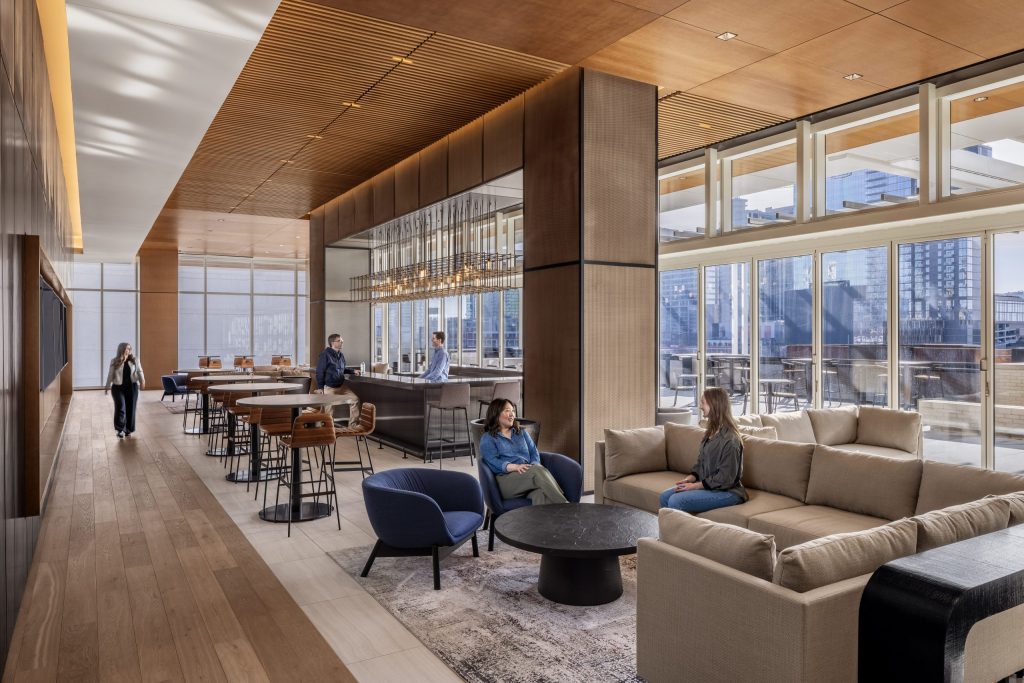
The Pinnacle
LOCATION
Nashville, Tennessee
AREA
650,000 GSF
PROJECT DESCRIPTION
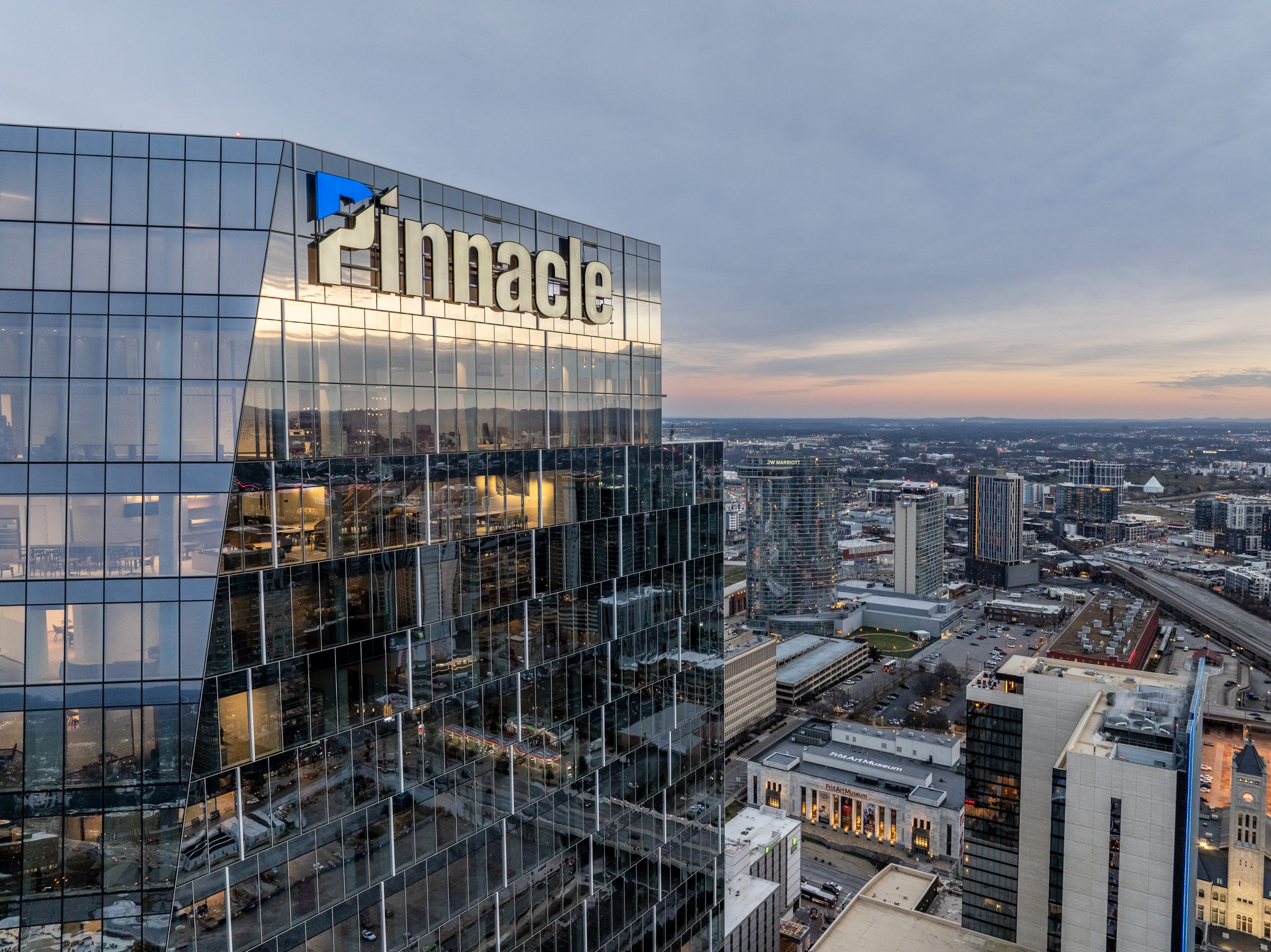
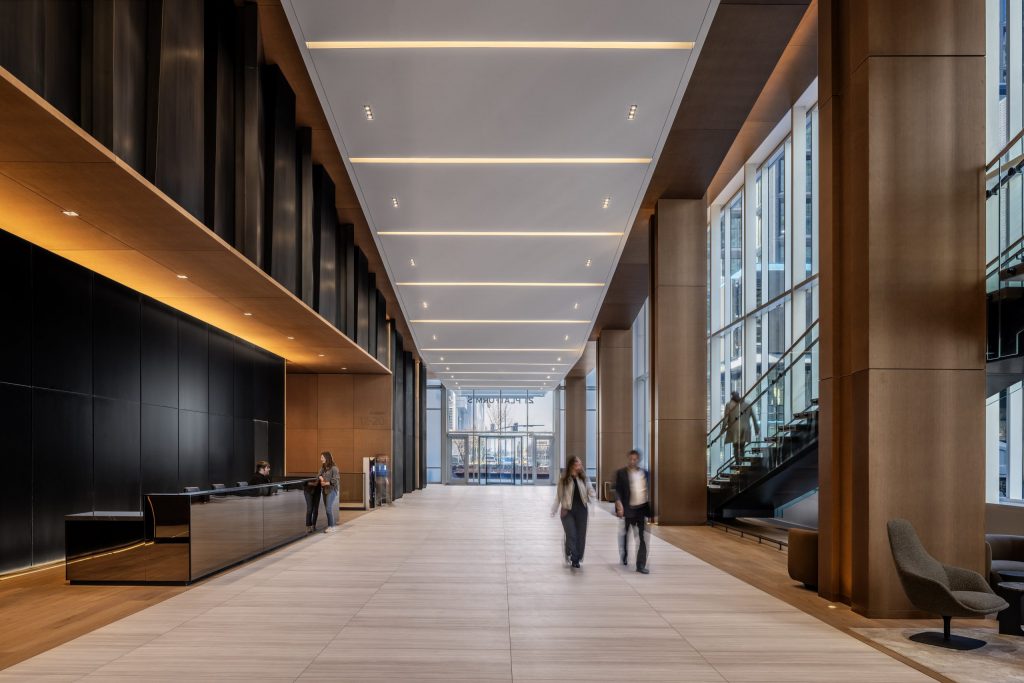
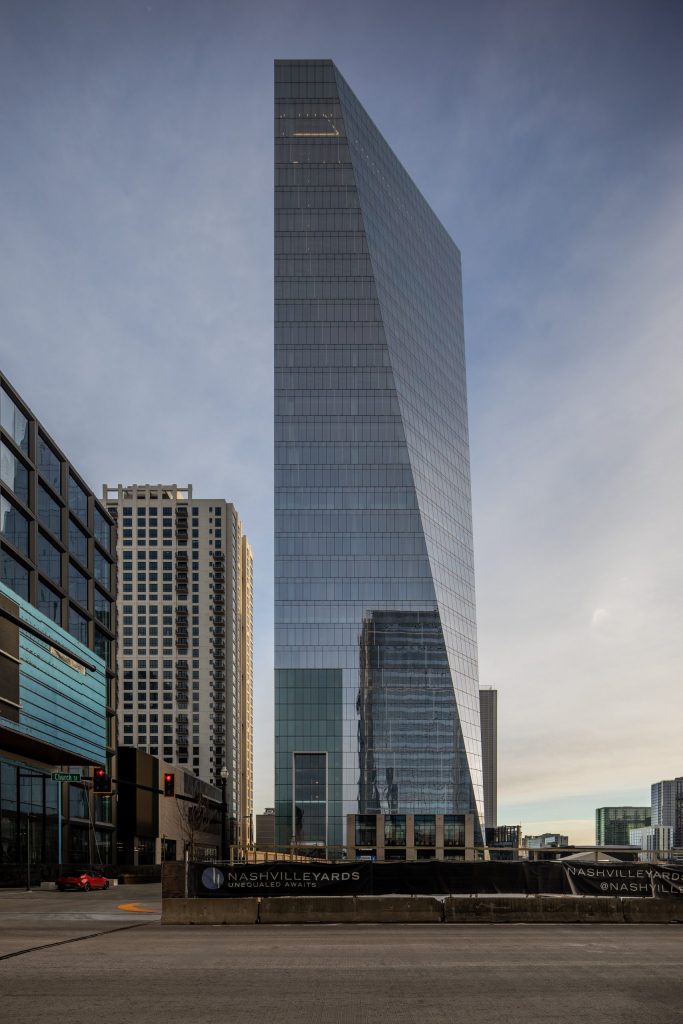
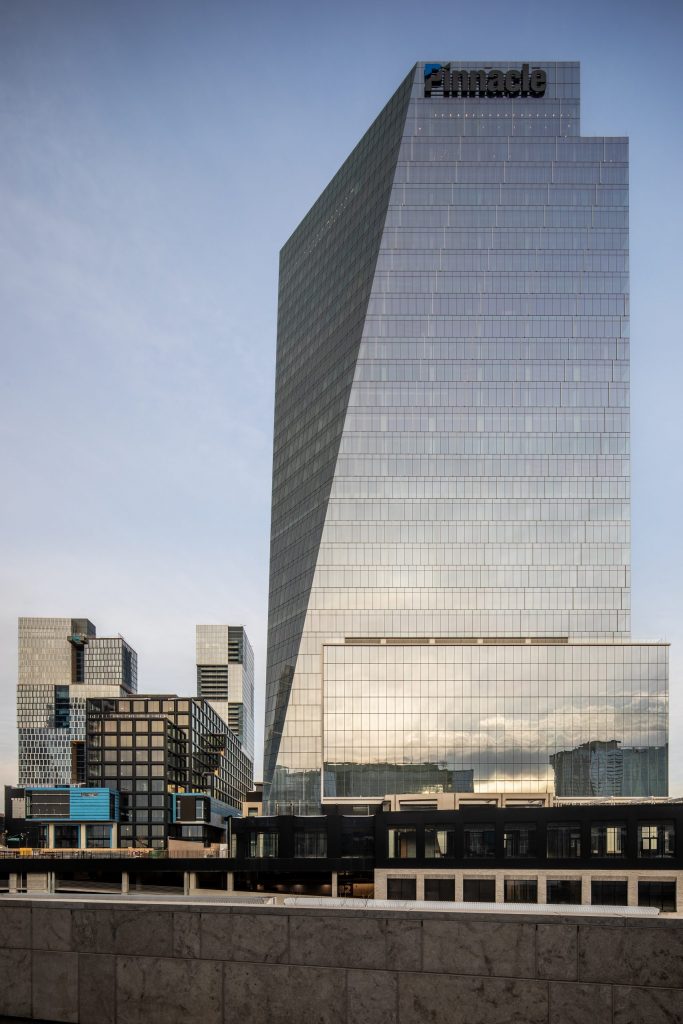
The Pinnacle Tower has been defined as the new “gateway” to downtown Nashville, establishing a new benchmark for high-rise design and engineering. It sits atop a 5-story podium and stands 35 stories above the historic railway yard. This impressive tower anchors the 19-acre Nashville Yards campus and delivers 650,000 square feet of Class A+ office space and 28,000 square feet of retail. Strategically interconnected with campus-wide security, wireless, and audiovisual systems, it offers seamless integration within a vibrant mixed-use environment.
As one of Music City’s first super-tall towers, it sets a new benchmark for integrated design, engineering innovation, and forward-thinking solutions—advancing performance, safety, and sustainability across Nashville’s skyline.
PROJECT HIGHLIGHTS
- Architecturally, the tower’s trapezoidal form and dynamic “twist” optimize daylight transmission, reduce energy consumption, and frame panoramic views, creating a striking visual identity.
- Mechanical, electrical, plumbing, and technology systems were consolidated within the core to maximize tenant space and preserve architectural integrity. Occupant Evacuation Elevators (OEEs) replaced a third stair, meeting stringent egress requirements while saving thousands of square feet and enhancing resilience.
- Advancing life-safety innovation, Pinnacle Tower is one of the first in Nashville to feature a Firefighter Air Replenishment System (FARS), a critical advancement in high-rise life safety. This system consists of a network of pressurized air lines integrated vertically through the building’s core, enabling firefighters to rapidly refill breathing apparatus without returning to ground level. By reducing turnaround time and maintaining a continuous air supply during extended operations, FARS enhances emergency response efficiency and occupant safety. Its inclusion reflects a proactive approach to resilience, meeting stringent safety standards while setting a precedent for future high-rise construction in the city.
- Sustainability guided system selection and configuration. Large steel piping and ductwork were eliminated to reduce embodied carbon and project cost. A water-side economizer was included to significantly reduce energy use, while all-electric heating supports decarbonization. Retail tenants were provided with the option for electric cooking, giving them the flexibility to choose not to use gas if they desired.
Photography credit: Chad Baumer Photography