Alvine Wins ACEC Honor Award
STEM On Display
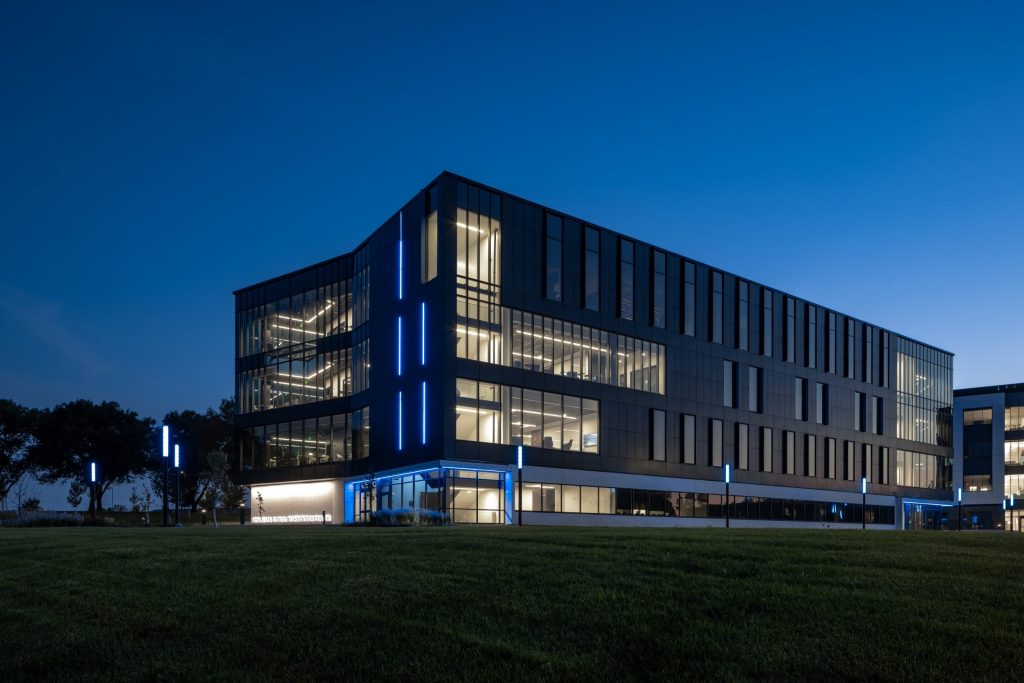
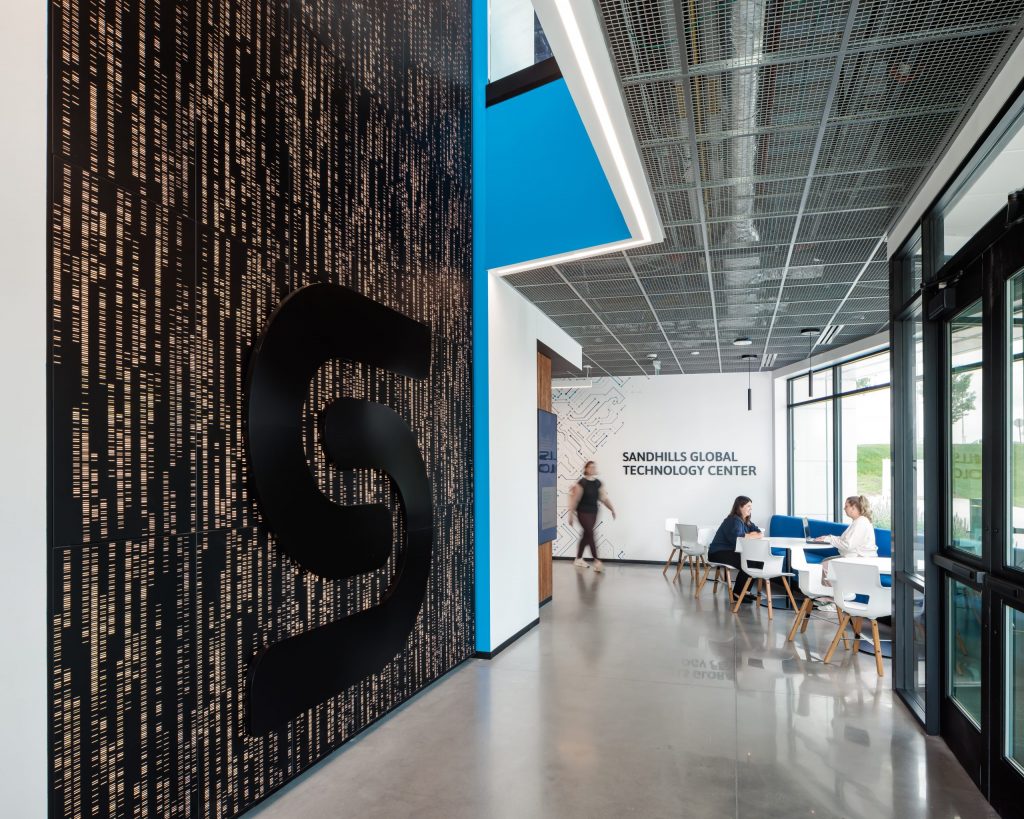
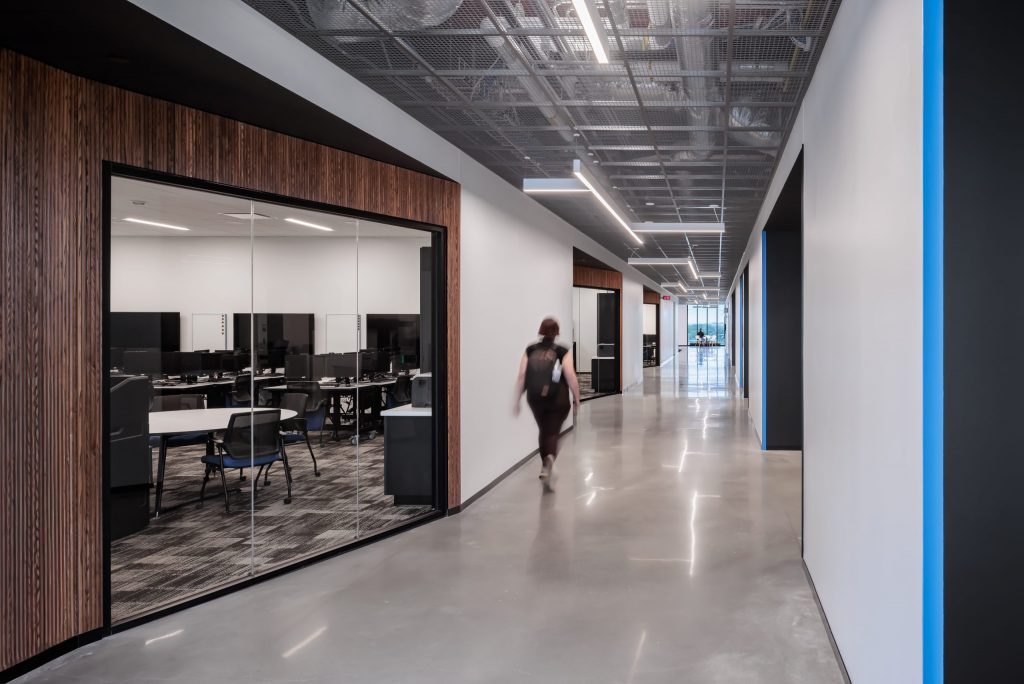
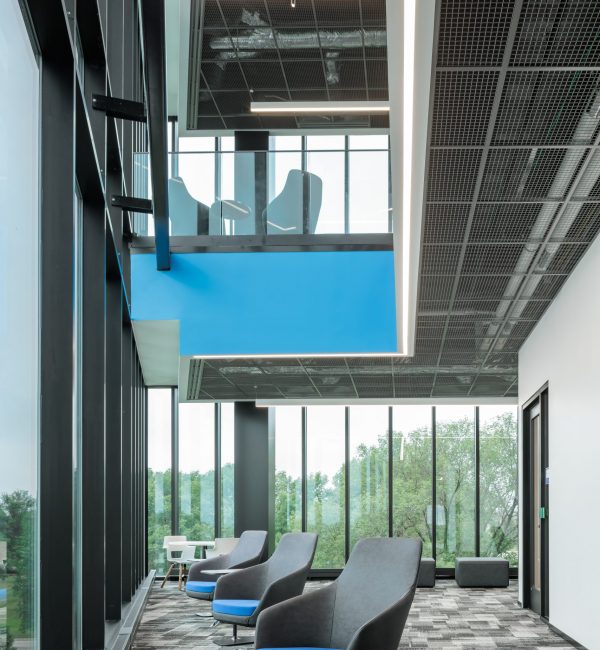
OMAHA, NE — Alvine is proud to announce that the Southeast Community College Sandhills Global Technology Center project received the 2026 ACEC Nebraska Honor Award in the Building/Technology Systems category. The Sandhills Global Technology Center is a four-story steel structure that features an angled curtain wall, metal panels, and a brick enclosure. But on the inside, there is a bigger story to tell. The whole design mission for the facility is to have the “learning on display” theme throughout. This allows specific spaces and floors of the building to be used as teaching tools for current students, staff, and potential students who set foot into the facility. The new building is both physically and functionally designed to support diverse career pathways for its STEM students. Within the facility, strategically designed mesh-metal ceilings in the hallways and classrooms, and glass walls showcase flexible, interactive classrooms, as well as functioning mechanical, electrical, and low-voltage technology systems visible to all.
The building’s design is nowhere near repetitive. It houses multiple STEM-related programs, including Chemistry, Biology, Microbiology, Anatomy & Physiology, Biotechnology, Computer Information Technology, Design Drafting Technology, Electronic Systems, Physics, Geology, and Continuing Education, all under one roof. With these distinct program spaces, our design team created unique mechanical and electrical systems to ensure maximum comfort, flexibility, and safety.
Hidden Complexities
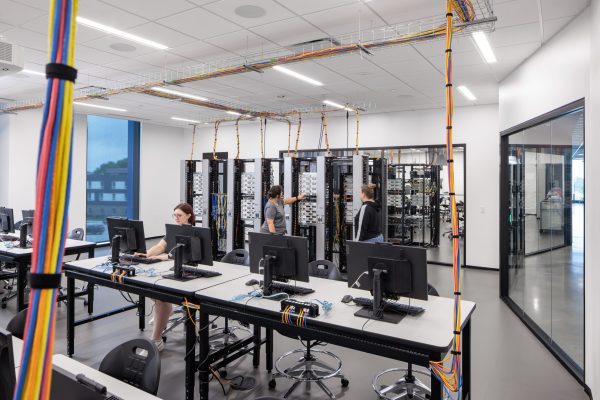
With that number of programs comes various types of programming spaces, thus leading to different utility designs. For instance, the Robotics classroom houses 12 robot stations. Many classrooms throughout the facility required specialty power and compressed air to support instructional equipment, which mimics equipment used throughout the industry. In the server room, eight server demonstration stations are fully functioning in the classroom. They can be turned on and off at will, doubling the cooling load. There is a challenge in locating the servers directly in the classroom, rather than in a dedicated room. The Alvine mechanical design team developed a solution to mitigate the significant heat generated when this occurs, without oversizing the rest of the room. The design incorporated a heat-capture plenum coupled with an exhaust system to respond to varying heat load conditions.
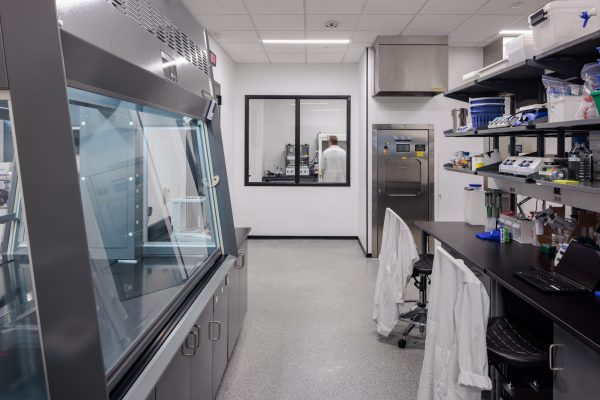
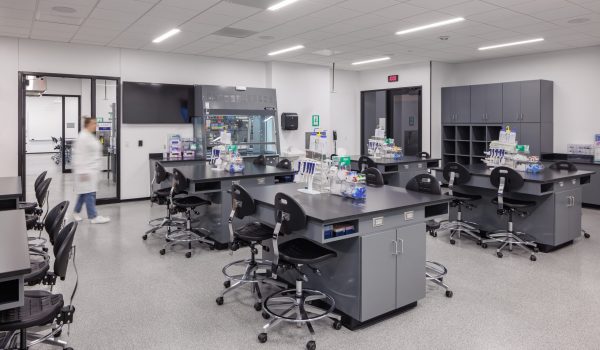
Biotech classrooms are often exposed to abundant bacteria and cultures. In such cases, various utilities are utilized, including piped oxygen, CO2, nitrogen, and purified water. Additionally, the space requires air pressurization to ensure its safety and prevent any impact on the students’ experiments. The Sandhills Global Technology Center biotech labs are equipped with pass-through sterilization autoclaves to ensure the proper material flow from dirty to clean, supporting lab operations.
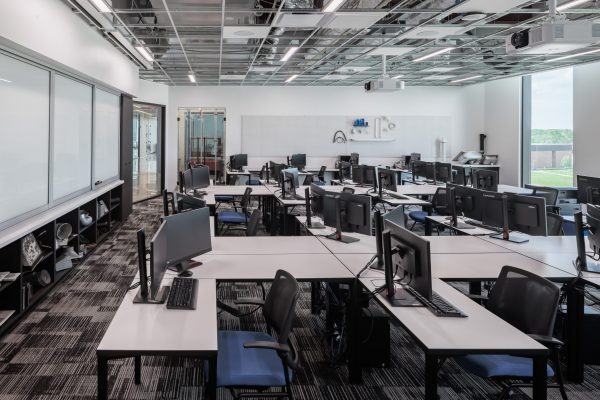
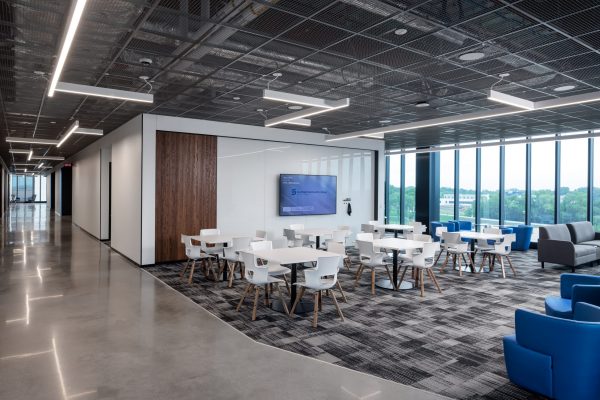
At the beginning of the design process, the fourth floor started as an alternate or a shell space. The Alvine team not only designed the shell space but also created a comprehensive design concept for the entire facility, which ultimately became a reality. The drafting room (DDRT) is on the fourth floor of the building, where 25 high-powered computers are located. This equipment generates massive amounts of heat, requiring careful placement of air distribution to maintain comfortable indoor spaces. Also on this floor, the Owner wanted the ceiling fully exposed, showcasing all the engineering and technology systems. The Alvine team had to select the correct colors for insulation, ductwork, and finishes to ensure the design reflected what the Architect and Owner had envisioned.
Along with the exposed ceiling, the design team recognized the presence of roof-mounted mechanical equipment for the facility. These two design decisions led to the challenge of masking excess noise. The Alvine team collaborated with our in-house acoustical consultants to develop a solution that combines sound masking, increasing the concrete mass on the rooftop to mitigate noise, and utilizing vibration isolation on the equipment to prevent structure-borne noise transfer from the roof-mounted equipment.
On the technology side, the challenge in the lab spaces was to design the audiovisual systems to enable a robust active-learning environment for both local and remote (off-campus) participants while maintaining instructional equity across the entire group. At the same time, the systems had to accommodate remote instructors and industry partners, thus facilitating not only remote learning but also remote instruction. The challenge of the lab environment also required an essentially wireless, systemically compact solution due to a lack of available wall real estate and the absence of floor boxes in the labs, which were subject to cleanliness restrictions, precluding the use of the instructors’ lecterns to house audiovisual equipment. Many new technologies for audiovisual signal transport, display, and control were implemented to reduce the space requirements of racked systems and achieve the maximum return on budget dollars.
Sustainable Best Practices
The Alvine design team kept sustainable design at the forefront of this project. The building is served by variable-air-volume (VAV) air-handling units with hydronic reheat. Each AHU is equipped with sensible and latent energy recovery wheels. An air-cooled chiller and high-efficiency modular gas-fired boilers provide cooling and heating. Service water heating is provided by air-source heat pump water heating, generating hot water and providing “free cooling” of the mechanical areas year-round. The building is also equipped with low-power-density lighting and a comprehensive lighting control system with color tuning and dimming capabilities. The modeled Energy Use Intensity (EUI) score for the facility is 45.7kBTU/sf/year, which is a 69% reduction from the 2018 IECC baseline.
The building is equipped with a high-performance envelope and permanent exterior shading devices for southern solar exposures. The biology laboratory spaces use transfer air from the adjacent classroom and office spaces to significantly reduce energy consumption, rather than using 100% outdoor air.
Daylight harvesting was provided within the facility to utilize natural daylight to maintain a consistent light level and a comfortable space for students and staff. Additionally, the lighting controls that were designed included a network system for the public areas. These connected lights, sensors, and controls enhance energy efficiency, occupant convenience, and facility security.
Community Impact
The Sandhills Global Technology Center is a collaboration among Southeast Community College (SCC), Sandhills Global, and the city of Lincoln to help address the skilled workforce gap in high-demand technology fields across the state of Nebraska. The new four-story, 65,000-square-foot building allows up to 1,000 students to learn within it. The previous space for the Information Technology department, which is now included in the new facility, was only about 11,000 square feet, with no room for expansion. There was insufficient lab space, no data center, and hardly enough room for a technology demonstration. With the new facility, the college will not only be able to offer its students more opportunities but also grow the number of students it can serve by about 40 percent. The flexible classroom designs and the “learning on display” theme throughout the facility allow for hands-on learning.
Multiple stakeholders benefit from the Sandhills Global Technology Center. The college itself benefits from a new, state-of-the-art facility that retains students and attracts students, faculty, and staff. The students learn in a unique, technology-enriched, hands-on environment that prepares them for high-demand jobs. Finally, local companies and industry partners will benefit from the programs housed within the space, as well as from students entering the job market post-graduation.