The Pinnacle of Nashville
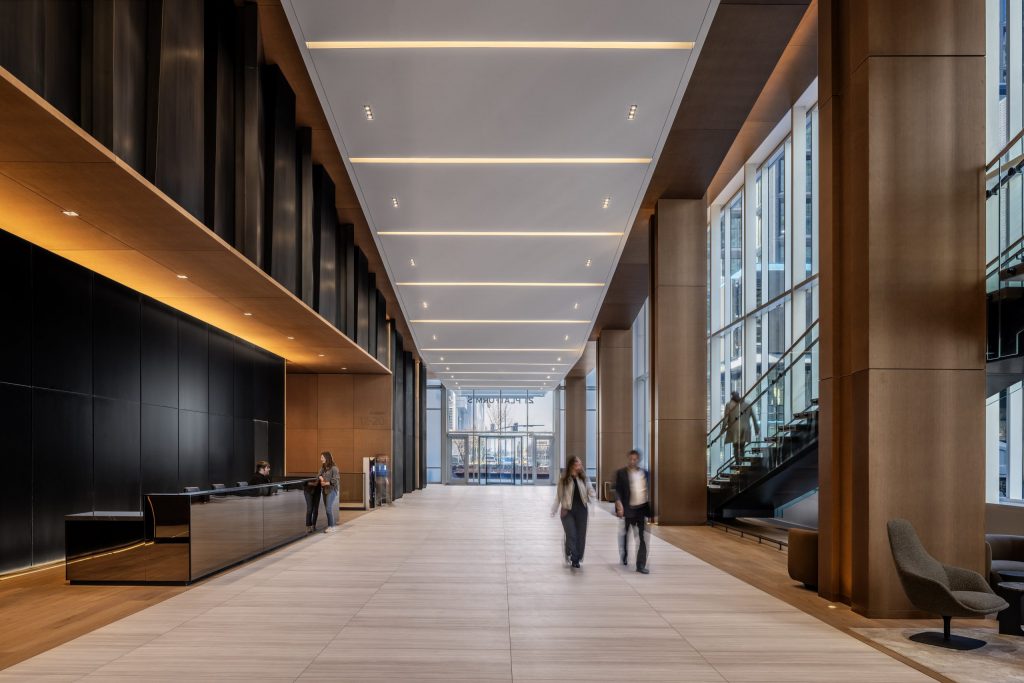
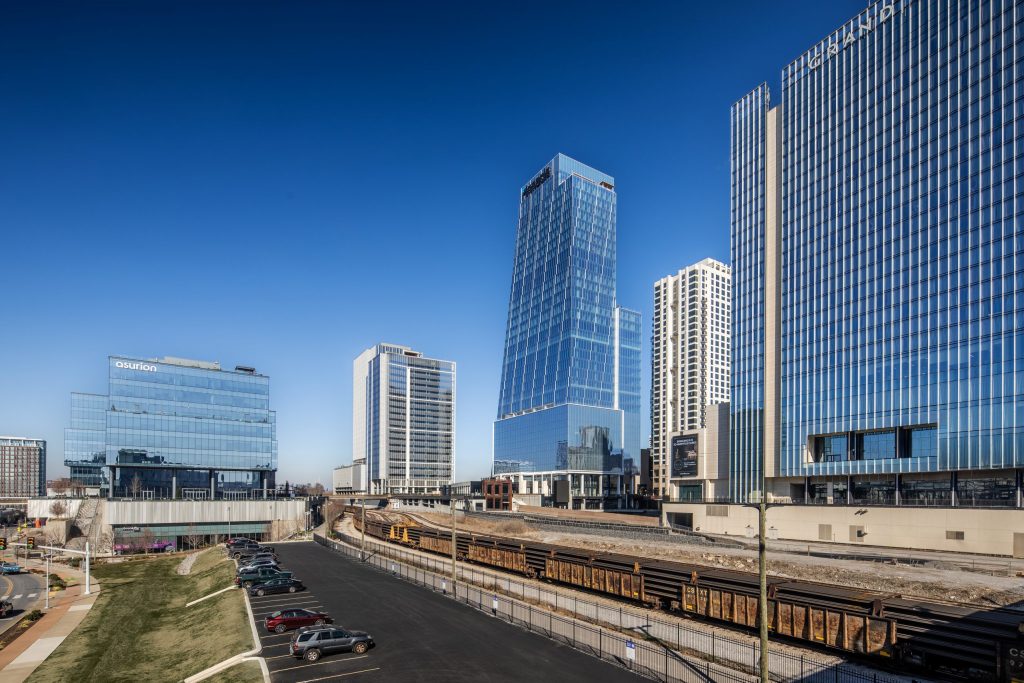
Nashville is the place to be, and Alvine has been vital in shaping the city as we see it today. Alvine entered the Nashville market as part of the 222 2nd Avenue South project team in 2015. It began a long-term relationship with the city that has included a running list of over 50 projects totaling over 10,000,000 square feet across over four square miles of the Nashville Central Business District. From large mixed-use sites like Fifth + Broadway to the Union Station Hotel to a timber office building in the WeHo District, Alvine’s experience in Nashville is as versatile as the city itself.
Que in the latest addition: The Pinnacle Tower.
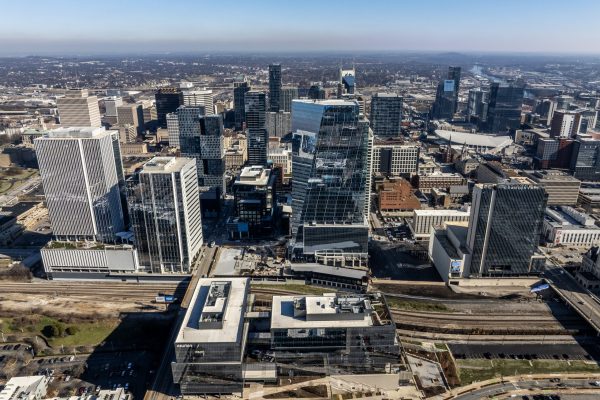
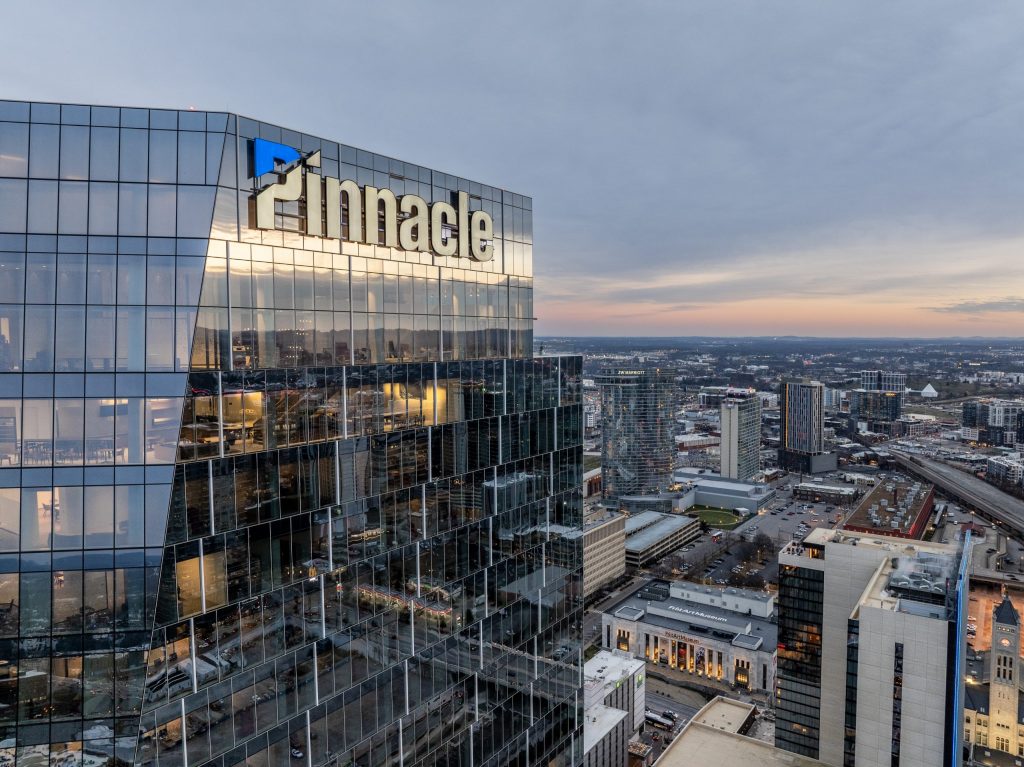
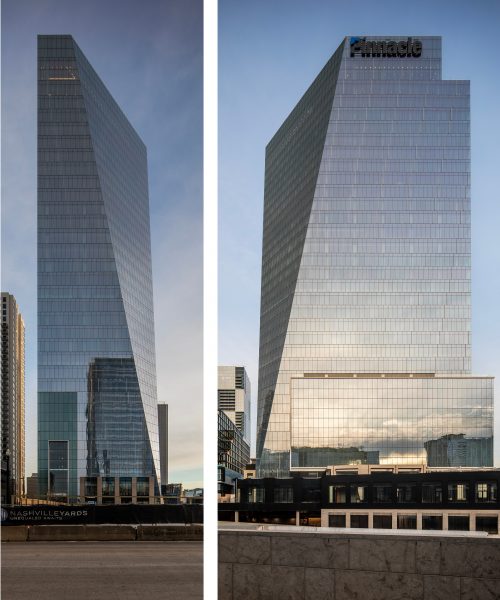
Situated on a five-level parking podium, the Pinnacle Tower stands 35 stories high in the heart of the 19-acre Nashville Yards mixed-use development, which features offices, residential developments, retail spaces, restaurants, and entertainment venues. This newest addition to the Nashville Yards campus currently boasts the highest occupiable floor of any office building in Nashville. Location was key before design even began on the project. The tower is accessible within minutes of downtown, Midtown, Capitol View, the Gulch, and the Riverfront. The project site offered many opportunities, making the design of the infrastructure for this unique development all the more rewarding.
The site was a major design influence with railroad tracks on the west side, a two-level road on the adjacent 10th Street, and future towers planned for the two remaining adjacent parcels. Placing infrastructure, which was critical to the building’s function, in a location that did not impact the public space was a team effort involving the architect, developer, and engineers to develop innovative solutions. -Alvine Principal and The Pinnacle Project Manager,
Brian Hadfield
Innovative Design
One of the tower’s most remarkable features is its shape. Its unique trapezoidal shape is designed to enhance views, reduce energy consumption, and allow more light to filter throughout its floors. The exterior design of the tower seems to “twist” as it rises into the sky, allowing the sunlight to cascade past the structure. To support the building’s shape, an emphasis was placed on developing an ultra-efficient core. To respect the architectural aesthetic, the mechanical system’s vertical pathways were located within the core of the tower, thereby increasing the amount of usable area on the floor plate.
To make the electrical rooms more efficient, three 4,000-amp bus ducts were used in lieu of dozens of conduits. The bus ducts allow for multiple taps to accommodate tenant loads, providing flexibility in tenant types and load densities. A dedicated retail switchboard was provided, consisting of a large switchboard and multi-meter sections, to serve the grade-level future retail spaces. The switchboard accommodates multiple tenants and allows spaces to be combined or separated as needed over time. The emergency generators were strategically located at the lower 10th elevation to utilize the mass of the elevated road structure, thereby limiting the noise impact on the adjacent sites.
Pinnacle Tower incorporates one of the city’s first Firefighter Air Replenishment Systems (FARS), designed to maintain operational safety during high-rise emergencies. The system uses a network of pressurized air lines routed vertically through the building, enabling rapid and reliable air delivery to multiple floors and allowing firefighters to refill their air tanks inside the tower.
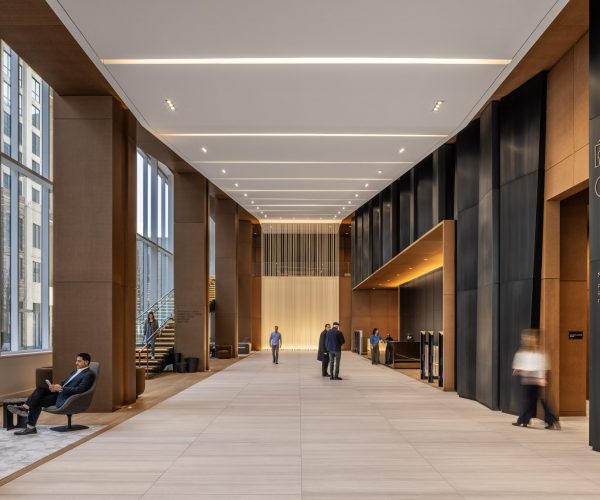
Integration & Collaboration
The integration of the mechanical systems was a collaborative feat throughout the tower. The selection of systems and their placement were heavily considered to maximize the office user experience. The main central plant, which included chillers, cooling towers, pumps, and outdoor air equipment, was located on the roof. By centralizing the location, the team eliminated the need for over 1,000 feet of large, vertical condenser water pipes, saving space and construction costs.
The team utilized a central chilled-water system with fan-coil units on the office floors, eliminating the need for an on-floor air-handling unit. This reduced base building ductwork to only ventilation, exhaust, and stair pressurization. Eliminating the floor-by-floor central air-handling units eliminated the need for large mechanical rooms, providing tenants with more usable, customizable space.
As one of Nashville’s first super-tall office towers to meet rigorous egress requirements, occupant evacuation elevators (OEEs) were used instead of a third stair. This decision saved thousands of usable and rentable square feet on the office floors and provided a more resilient, vertical transportation system.
The structural engineer, architect, and Alvine had completed two other office buildings on the Nashville Yards campus, so there was already a lot of trust and experience working together. The Pinnacle was the tallest and had the most diverse uses of the three buildings, with retail, office, parking, and a child care component all housed within the development. This group of designers worked seamlessly together through regular design meetings and communication to solve problems as they arose and proactively developed plans to communicate information to each team member at the right time, enabling them to complete the design. -Alvine Principal and The Pinnacle Project Manager, Brian Hadfield
Energy Efficient Solutions
With the amount of attention to detail on system types and locations, the design team was able to eliminate a significant amount of piping and ductwork in the tower. This reduced the embodied carbon for construction and saved on project costs. The mechanical team utilized highly efficient, magnetic-bearing chillers to significantly enhance the efficiency and sound quality of the structure. To reduce energy consumption and mechanical stress, variable-frequency drives (VFDs) were used for chillers, pumps, and fans. This enabled seamless integration into control systems, while providing feedback and facilitating a more efficient operation.
To supplement mechanical refrigeration, the design includes a water-side economizer. This saves energy by cooling the water without operating the mechanical chillers under cooler atmospheric conditions. Gas was not used in the mechanical design; instead, the building’s heating and water heating for plumbing systems are all electric, supporting decarbonization.
While the electrical services were designed for flexibility and accommodating higher-density users, sustainable practices were also implemented. Food and beverage retail tenants were provided with sufficient electrical capacity and flexibility to utilize all-electric cooking, while offering the option to use gas if desired. This decision helps limit the use of gas and associated emissions.